 About Age-Adapt |
|
|
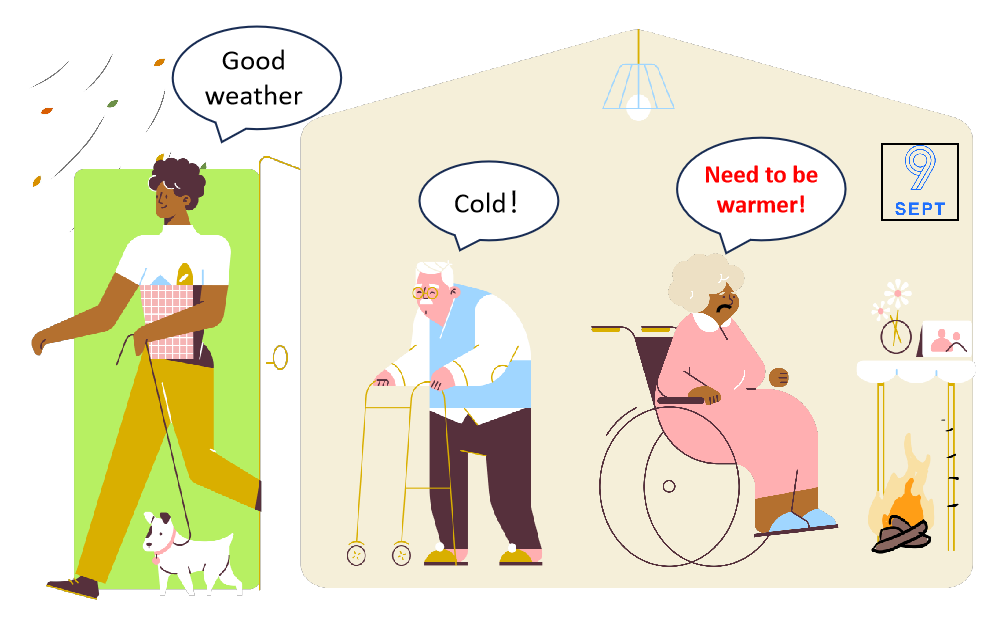
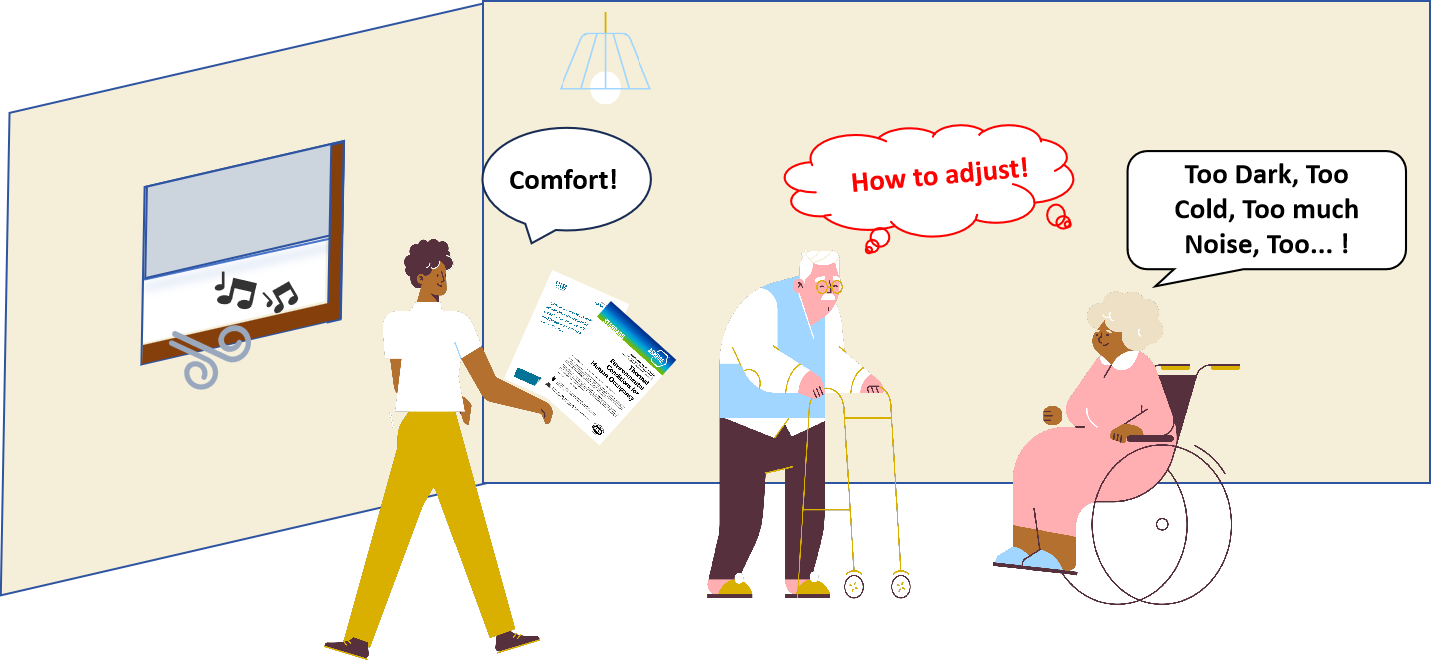
Europe faces significant challenges, such as an ageing population, shortage of energy, and climate change. As elderly people's physical and adaptive abilities decline, their needs for health and comfort in the indoor environment rise. The gradually expanding elderly population may result in increased building energy consumption and a higher carbon footprint. However, indoor comfort standards are usually targeted healthy young populations and address singular domain environment. Little knowledge exists about how to balance well-being and energy consumption in multi-domain indoor environments (thermal, visual, acoustic and indoor air quality) for older adults. This knowledge gap has motivated Age-Adapt. |
|
  |
|
|
We aim to improve well-being and minimize energy consumption by comprehending the adaptive cycles for elderly people in multi-domain indoor environments, enabling us to propose adaptation strategies. A three-stage hierarchical research methodology combining living lab experiments with fixed and adjustable environmental conditions and field investigations has been defined to: |
|
|
- Assess the effects of multi-domain indoor environments on the physiological, behavioural, and psychological adaptation of older adults. |
|
|
- Assess the role of physiological, psychological, and energy consumption benefits after behaviours have occurred. |
|
|
- Create models, evaluations, and strategies for adaptive comfort in indoor multi-domain environments for older adults at different health levels. |
|
 |
|